
Enterprise organisations don’t need more HR initiatives. They need a People function organised around the business problems that matter most.
PX PRODUCT TRANSFORMATION
We don’t put product language on top of traditional HR. We redesign how People work is organised, prioritised and delivered. The PX Product Model helps People functions move beyond programmes, requests and disconnected specialist teams towards clearly defined problem spaces, continuous discovery, delivery and measurable impact.
A PX Product operating model changes how the People teams create value. Instead of organising work around HR services, projects or requests, it focuses the People function on the business problems that matter most.
The question is no longer:
“What HR service should we improve?”
It becomes:
“Which organisational problems matter most, and what value would solving them create?”
That shift changes how work is prioritised, how teams are organised, how success is measured, and ultimately, the impact your People function delivers.
THIS IS NOT:
THIS IS:
THE TEAM
Transformation doesn’t happen through the model alone.
SapienX, in partnership with Red Oak, deliver product transformation at scale. This partnership is designed to give organisations the right blend of strategic challenge & direction, product expertise, coaching, facilitation and hands-on support.
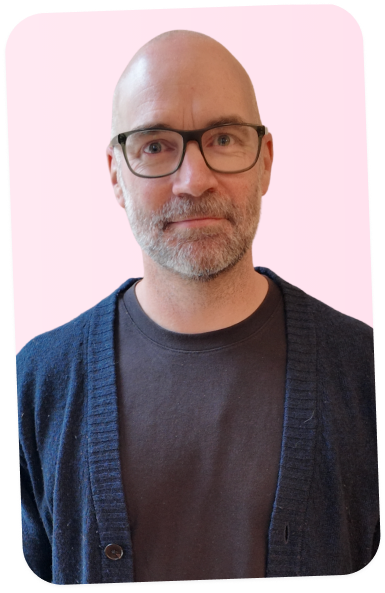
Chris Metcalfe
FOUNDER, RED OAK

Product Leadership &
Product Operating Model
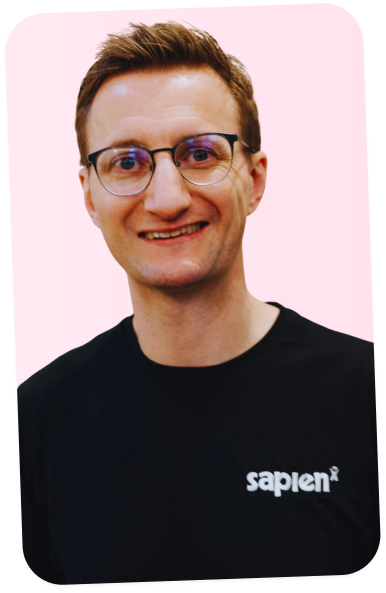
Luke O’Mahoney
FOUNDER, SAPIENX

People Experience &
PX Product Transformation












THE BROKEN MODEL
Most People teams are full of talented people doing valuable work. The challenge is rarely capability. It’s the operating model around them.
As organisations become more complex, traditional HR models struggle to prioritise work, connect it to business outcomes, and demonstrate measurable value.
The result is a People function that is constantly busy, but often reactive. Teams become overloaded with requests, disconnected across specialist functions, and measured more by activity than impact.
The issue isn’t the people.
It’s the system they’re working in.
Symptoms of a strained HR model
THE PRODUCT MODEL
Traditional People functions are often organised around specialist teams such as Talent, Reward, Learning, Operations and Employee Relations.
Those capabilities matter. But when work is organised in silos, it becomes harder to solve the cross-functional problems that shape how people experience work.
A PX Product operating model organises work around clearly defined problem spaces instead.
Each problem space sits at the intersection of business strategy, user needs, prioritisation, behavioural change, and measurable value.
Cross-functional product teams are then empowered to own those problem spaces end-to-end. They continuously discover opportunities, test assumptions, deliver improvements and measure the impact they create.
How We Define a Problem Space
Business Strategy
The outcomes the business needs to achieve
User Needs
The needs of employees and stakeholders
Prioritisation
The highest-value problems worth solving
Functional Outcomes
The behaviours, capabilities and experiences that must change
Value Creation
The measurable value those changes should create
A product operating model doesn’t replace existing People disciplines. It gives them a clearer role within a shared system of value creation.
Product leadership, operations, delivery, business partnering, enablement and specialist teams all contribute.
The difference is that everyone is working towards the same business outcomes, with clear ownership, shared priorities and measurable outcomes.
PRIORITIES. PROBLEM SPACES. PRODUCTS.
Product-led People teams create a clear line between business priorities, the problems they solve, and the outcomes they deliver.
Business Priorities
What is the organisation trying to achieve?
Problem Spaces
Which people and organisational problems are most likely to affect those priorities?
Product Teams
What do teams need to learn, test, build and improve?
Functional Outcomes
What behaviours, capabilities, conditions and experiences need to change?
Business Impact
What measurable value does that create for the organisation?
Real transformation isn’t learning a model.
It’s changing how work gets done.
ENGAGEMENT MODEL
SapienX is not a traditional consulting firm. We do not disappear into a room, produce a slide deck, and hand over a transformation plan for your organisation to interpret alone. We work alongside senior sponsors, transformation leaders, and selected teams to help the organisation make progress in practice.
Our goal is simple: make ourselves unnecessary. We guide the activation, but your team develops the habits, confidence and operating model to continue without us.
What we provide
What you own
→ Defining the problems
→ Making the decisions
→ Applying the model
→ Scaling what works
THE JOURNEY
Transformation doesn’t happen overnight. We work in phases to reduce risk, build momentum and prove value before expanding. Start small, learn quickly and scale with confidence.
Most enterprise transformations take 12-18 months, depending on the size, complexity and ambition of the organisation.

PHASE 01
Strategic Alignment
Create executive alignment on why the shift matters, what success looks like and who owns it.
PHASE 02
Business Discovery
Start with business priorities, then identify the People problem spaces most likely to unlock value.
PHASE 03
Problem Definition
Define the problem spaces where solving the right challenges will create the greatest business value.
PHASE 04
Readiness
Create the shared language, operating principles and confidence needed before teams begin working differently.
PHASE 05
Pilot Teams
Launch 1-3 pilot teams in high-value problem spaces. Practice continuous discovery and delivery on live business challenges.

PHASE 06
Adapt & Scale
Capture learning, refine the model and expand into new problem spaces while building internal ownership.
BEYOND CAPABILITY BUILDING
We don’t offer capability building as a stand-alone service because capability isn’t the outcome. Better ways of working are. Learning matters, but only when it’s applied to real organisational challenges. That’s why every capability we build helps teams operate with greater clarity, confidence and impact.
What you unlock
TRANSFORMATION OUTCOMES
Transformation doesn’t just improve how the People team works. It changes what the function can achieve. The result is a People organisation that identifies the right problems, mobilises the right teams, delivers meaningful solutions and demonstrates measurable business value.
Operating Model
Defined roles, capabilities, rituals, and decision-making structures for the People product function.
Problem Spaces
Empowered product teams operating within spaces aligned to organisational priorities.
Impact
Clearer ways to measure and communicate the impact of People work on employee, stakeholder, and business value.
Capability
Build the internal skills and structures to sustain and grow the model over time.
Strategic Value
Identify the problems that matter, mobilise the right teams, and create products people actually use.
Measurement
Connect the work of the People function directly to outcomes the organisation cares about.
The deeper value is not just a better-functioning People team. It is a People function that can operate as a strategic growth system for the organisation – one that can identify the problems that matter, mobilise the right teams around them, create products and solutions people actually use, and show how that work contributes to measurable business impact.
REAL TRANSFORMATION
SapienX and Red Oak are currently leading a product operating model transformation inside a 15,000+ employee online retailer, working with a People function of more than 450 people.
The engagement spans executive alignment, problem space definition, pilot product teams and capability building, creating the foundations for a scalable People product operating model.
A full case study is in development.
For qualified enterprise conversations, stakeholder references may be available by introduction.
COMMON QUESTIONS
No.
The goal is not to rebrand HR or make HR sound more modern. The shift is from a traditional HR operating model to a problem-first, value-led product operating model for People work.
No.
This is a common misunderstanding.
The work is not about productising HR services. Products and solutions emerge from discovery inside clearly defined problem spaces. The starting point is not the service catalogue. The starting point is the problem worth solving.
No.
Capability-building is part of the journey, but only once there is a clear operating model, defined problem spaces, and real teams ready to apply the capability.
Training in isolation often leads to people applying product practices on top of the old HR model. That is not transformation.
The transformation is designed to scale through pilots, not through a sudden wholesale reorganisation.
Business-as-usual can continue while selected pilot teams are activated. The important caveat is that people in those pilot teams need permission to make the pilot their actual work for the duration of the pilot.
Not at the beginning.
The early stages focus on alignment, discovery, problem spaces, pilots, and proof of concept. Later, the work may involve realigning roles and capabilities into the product operating model, but this is not a mass-restructure exercise.
The work is more about understanding which roles and capabilities already exist, where they fit in the product operating model, and how to align effort around value creation.
Design thinking and agile practices may appear inside the model, but they are not the transformation.
This is about changing the system of work: how People work is prioritised, organised, governed, delivered, measured, and scaled.
The work needs senior sponsorship from People, HR, or transformation leadership.
It also needs selected leaders and practitioners who can participate in discovery, problem space definition, and pilot team activation.
The most successful transformations are not externally imposed. They are internally owned, with the right external support to create momentum, challenge, structure, and capability.
If you’re ready to build a People function organised around business priorities, measurable outcomes and empowered teams, we’d love to show you how.